
If you want to communicate anger without letting it come out as yelling, attacking, shutting down, or another behavior that harms the conversation, start by naming what is happening inside you.
I recently got an email asking, “Bob, how can I express my anger without being aggressive?” It’s a good question—and the answer starts with getting clear about what anger is expressing.
Anger is the behavior that does the talking
In the way I teach it, anger is a behavior: yelling, fighting, insulting, throwing things, drinking, using drugs, ignoring someone, or isolating. Aggression is a broad bucket for behaviors that push, threaten, or harm. Those behaviors are expressions of what is happening underneath them; they do not tell the whole story by themselves.
So the deeper question is: What is the anger behavior expressing?
Often, it is expressing hurt or fear, along with the body’s stress response. Maybe you feel disrespected, dismissed, misled, betrayed, or taken advantage of. Maybe your mind is predicting, “I’m about to be rejected,” “I don’t matter,” or “I’m going to be pushed out.” Those interpretations can bring up sadness or fear and activate the body’s fight-or-flight response. Then a behavior comes out—sometimes before you have stopped to identify what you are thinking, feeling, wanting, needing, or expecting.
The prediction can feel convincing without being a fact. “They disagreed with me” does not automatically mean “I’m unwanted.” Slowing down gives you a chance to check the story before reacting to it.
Say what is happening for you
If you want to communicate without attacking, advocate for yourself directly. Try to describe your thoughts, feelings, needs, and concerns in a healthy, specific way. For example:
- “I’m feeling disrespected right now, and I want to explain what led me to that conclusion.”
- “I’m getting the sense that I’m being misled. That brings up fear for me because honesty matters to me.”
- “I’m worried I’m being left out of this decision. Can we talk about what each of us expects?”
These statements keep the focus on your experience. They also give the other person something they can respond to besides an accusation.
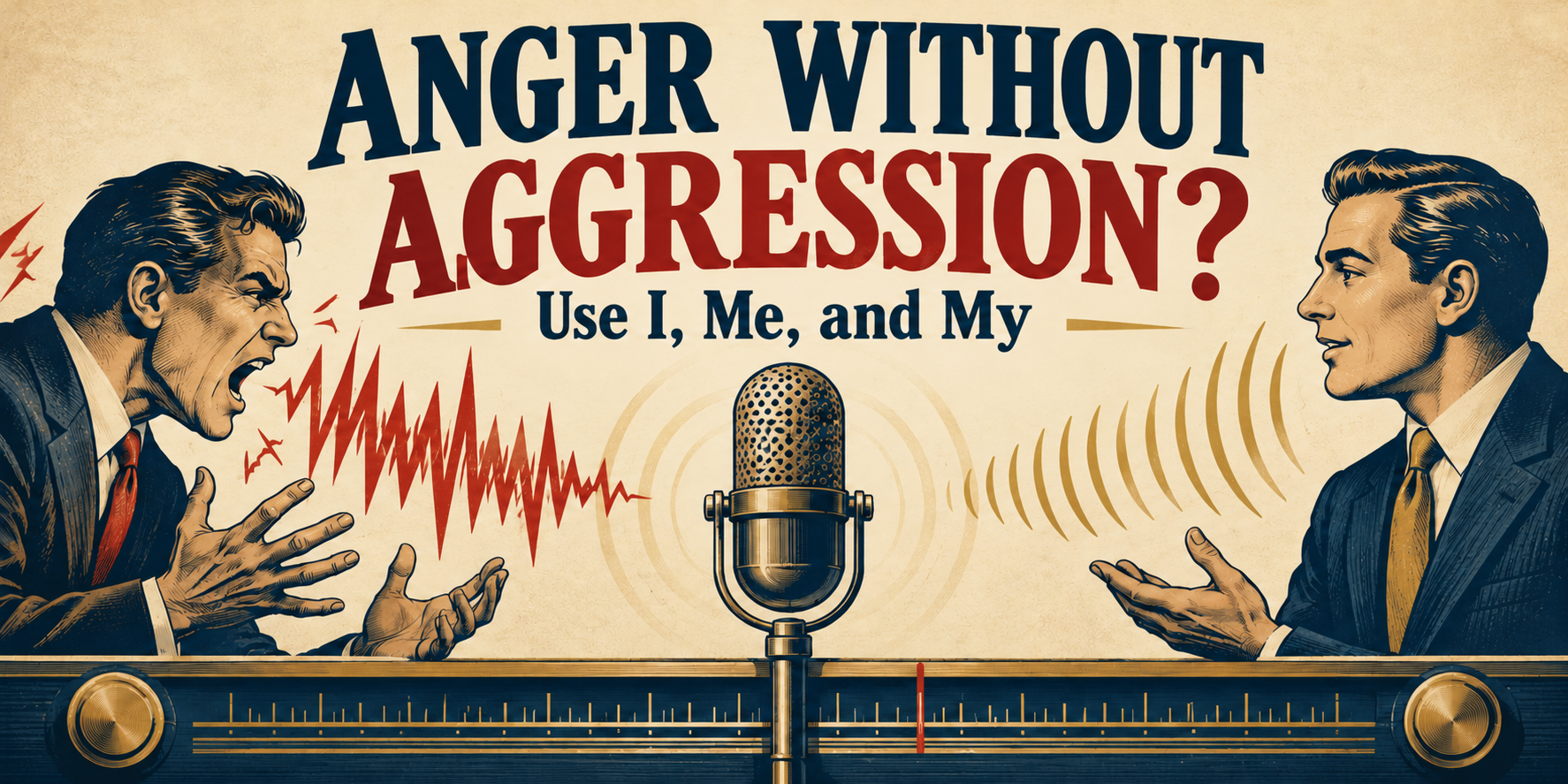
Use “I, Me, and My”
When a conversation is tense, try using I, me, and my: “I think…,” “I feel…,” “I need…,” and “I’m concerned that….” Keep the statement about your experience and be clear about what you are asking for.
Then remember the F-YOU rule: Forget the word “you.” This is a reminder to avoid “you always,” “you never,” “you should,” “you have to,” and “you’re the one who….” Those phrases often sound like blame, even when you are trying to explain your hurt. The other person may start defending themselves instead of listening to what you are trying to say.
Compare:
- Accusation: “You never listen to me. You always do whatever you want.”
- Self-advocacy: “I feel unheard when I don’t get a chance to finish. I’d like us to take turns and hear each other out.”
Using “I” statements does not guarantee agreement, and it does not mean you have to minimize what happened. It helps you take responsibility for communicating your experience without making your anger behavior the spokesperson.
Don’t let anger be your lawyer
Yelling, shutting down, or striking back can take over the conversation and leave the real issue untouched. Anger behavior can become your lawyer, your mouthpiece, or your public-relations firm—but it may not make the case you want it to make.
Pause long enough to ask yourself:
- What am I telling myself about this situation?
- What am I feeling underneath the anger—hurt, fear, or something else?
- What outcome am I worried about?
- What do I need the other person to understand or do?
- How can I say that using “I, me, and my”?
You may still feel angry. The goal is to choose how you communicate instead of letting the first behavior that shows up speak for you. Name what is happening, explain why it matters, and make a clear request. That gives you a better chance of being heard—and a better chance of protecting the relationship while addressing the problem.
The next time anger starts doing the talking, pause. Use “I, me, and my.” Forget the word “you.” Then say what you’re thinking, feeling, needing, and expecting.
This article is adapted from a segment of The Bob Zima Radio Showgram.


Leave a Reply