Is anger an emotion—or is it a behavior?
This question comes up frequently. It can also become a stumbling block when we are trying to heal our anger.
Most people have been taught that anger is an emotion. Popular culture certainly treats it that way. In psychology, anger is also generally classified as an emotion accompanied by particular thoughts, physical sensations, impulses, and behaviors.
That is a perfectly legitimate definition.
However, as a counselor, speaker, and podcaster, I often find it more useful to approach anger as a behavior—or, more accurately, as a collection of behaviors.
Why?
Because this approach shifts our attention toward the part of the anger process over which we have the greatest influence: what we choose to do next.
Feeling Something Is Not the Same as Doing Something
Emotional responses are often automatic.
When something happens, our minds immediately attempt to understand it. What is happening? Why is it happening? What does it mean about me? Am I being rejected, disrespected, abandoned, controlled, embarrassed, or threatened?
This interpretation may be conscious, or it may happen so quickly that we barely recognize it.
Our thoughts, beliefs, memories, values, temperament, and previous experiences all influence how we interpret the situation. That interpretation can then generate emotional and physiological responses.
We might experience hurt or fear. Our hearts may race. Our breathing may accelerate. Our muscles may tighten. We may sweat, experience dry mouth, or feel sick to our stomachs.
We do not always choose those initial responses.
We do, however, have some responsibility for what we do with them.
Why I Focus on Anger as a Behavior
Behaviors are how we express what we are thinking, feeling, and physically experiencing.
When people say that someone “got angry,” they are often describing something the person did: yelled, screamed, insulted, threatened, punched, kicked, threw something, slammed a door, shut down, ignored someone, or walked away in a huff.
Those are behaviors.
Some anger behaviors are loud and aggressive. Others are quiet and avoidant. Yelling is a behavior, but so are giving someone the silent treatment, refusing to communicate, becoming sarcastic, or abandoning an important conversation.
Not every expression of anger is unhealthy. Anger can motivate us to establish a boundary, advocate for our own wants and needs, protect someone, or address a problem that needs attention.
The essential questions are:
Is the behavior healthy or unhealthy?
Is it effective or ineffective?
What outcome is it creating?
When I approach anger as a behavior, I place it within my orbit of control. I may not have selected my initial emotional reaction, but I can learn to influence how I interpret the situation and decide how I will respond.
That makes me accountable—not for having feelings, but for how I express them.
What Is an Anger Behavior Expressing?
Anger behaviors communicate something.
They express what we are thinking, what we are feeling, what our bodies are experiencing, and what we want to happen next.
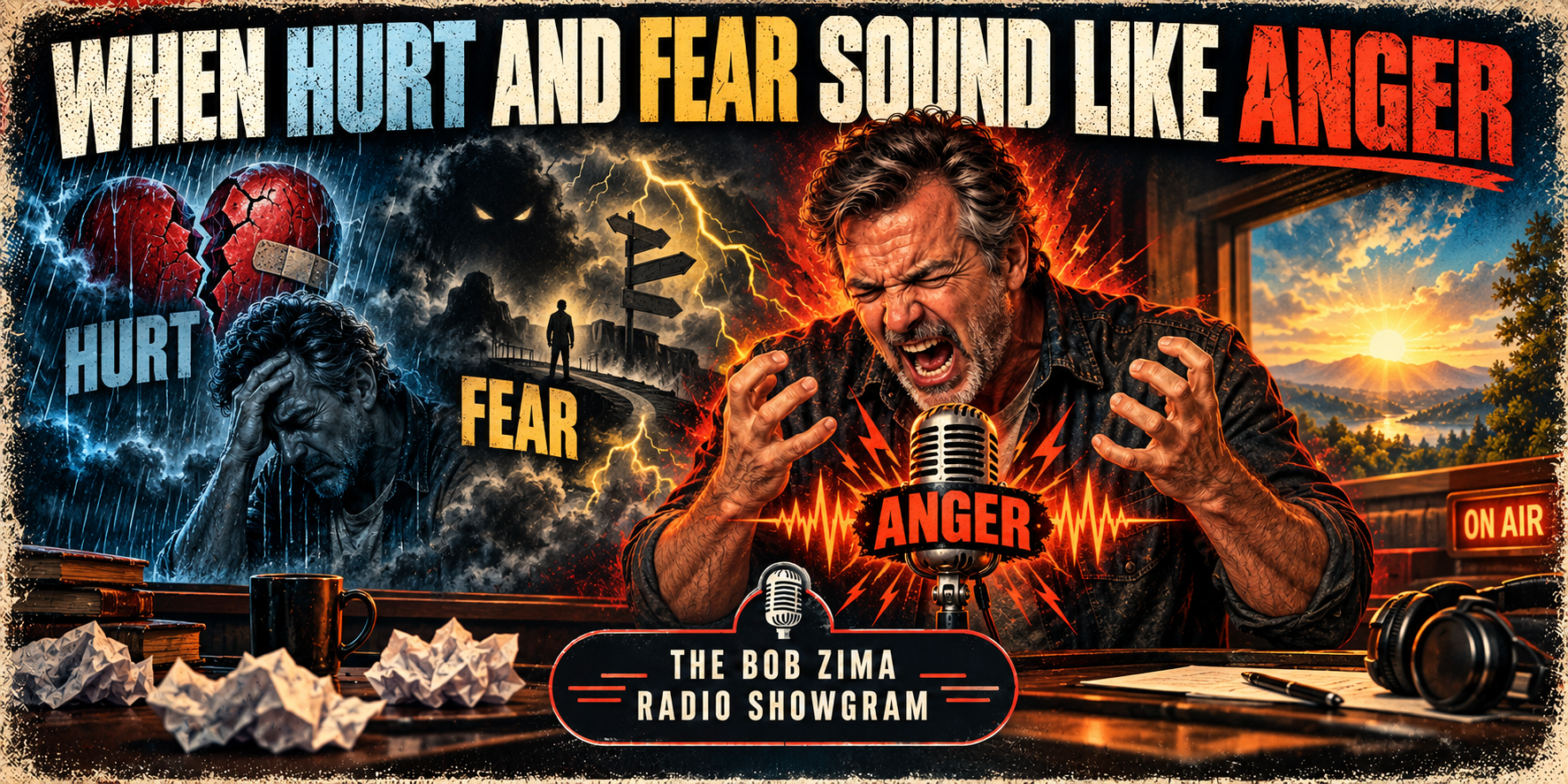
Many anger behaviors are fueled by hurt, fear, or some combination of the two.
A person may yell because he thinks he is being ignored. He may threaten because he believes that he is powerless. He may withdraw because he believes that rejection is coming. He may attack someone’s character because his own sense of worth is threatened.
The behavior may also release some of the uncomfortable physical energy produced by the body’s threat-response system.
When the mind detects danger—whether the danger is physical, relational, emotional, or psychological—the body prepares to fight, flee, freeze, or protect itself in another way. The heart races, muscles tighten, breathing changes, and adrenaline begins flowing.
That physical intensity can feel like anger. It can also create a strong impulse to do something immediately.
An impulse, however, is not the same as a command.
Why Anger Can Feel Automatic
People often describe anger as something that simply took over.
“I lost it.”
“I exploded.”
“I saw red.”
“I wasn’t thinking.”
Those experiences are very real. When emotional and physical arousal becomes intense, the space between the trigger and the behavior can become extremely small.
The response may feel reflexive rather than chosen.
However, feeling automatic does not mean the pattern is permanent. It means the response has become highly practiced.
The basic pattern often looks like this:
Something happens.
We interpret the situation.
A core belief is triggered.
We respond emotionally and physically.
We select a behavior.
That behavior produces an outcome.
If the same trigger repeatedly activates the same belief and produces the same behavior, the pathway becomes faster and more familiar. Eventually, we may act before we have consciously recognized what we are thinking or feeling.
Anger healing helps us slow that process down.
Accountability Is Not the Same as Shame
Viewing anger as a behavior does not mean condemning ourselves for having intense emotions.
Feeling hurt does not make us weak. Feeling fear does not make us cowardly. Experiencing a powerful physical stress response does not make us defective.
Accountability means recognizing that our behavior has consequences.
Yelling may end a conversation, but it may also damage trust. Intimidation may make someone give in, but it may create resentment and fear. Walking away may provide immediate relief, but it may leave an important problem unresolved.
Many unhealthy anger behaviors are effective in the short term. They help us discharge energy, avoid vulnerability, regain a sense of power, or get someone to stop doing something we dislike.
Unfortunately, what works in the moment may damage our relationships, careers, hopes, dreams, and emotional well-being over time.
Changing Anger Behaviors
Changing anger behaviors involves more than telling ourselves to calm down.
It requires us to become mindful of the entire process.
What happened?
What did I tell myself about what happened?
Which core belief was triggered?
What did I feel emotionally?
What happened inside my body?
What did I want to accomplish?
Which behavior did I select?
What outcome did that behavior produce?
We can then examine whether the belief driving the reaction is accurate, helpful, and relevant to the present situation. Some of our core beliefs are outdated conclusions developed through painful experiences. Others are rigid demands about how people must treat us or how life is supposed to unfold.
Those beliefs can be reviewed, challenged, and revised.
As our thinking changes, our emotional and physical responses can change. As we become more aware of our internal reactions, we create more space to choose healthier and more effective behaviors.
So, is anger an emotion or a behavior?
Clinically, anger is commonly understood as an emotion. In everyday life, however, the word “anger” is often used to describe the behaviors through which we express our thoughts, feelings, and physical arousal.
For the purpose of healing, I focus on anger as behavior because behavior gives us a practical place to begin.
I am not responsible for never feeling hurt or afraid.
I am responsible for learning how to respond.
If I do not like my behavior—and especially if I do not like the consequences that behavior creates—it is up to me to change it.
That is not a sentence of shame.
It is an opportunity to heal.